Wednesday, February 22, 2017

on gratitude.

One of my favorite students, (yes, non-teachers, we all have them) enlightened me yesterday.  In prompting students to identify themes in Out of the Dust, one of my faves shared her thoughts.  


“The theme is appreciate what you got.”


“I hadn’t thought of that one, what makes you say that?”


“Well, Billie Jo and her family were covered in mud and dust.  The cattle was basically bones and so were the people.  Billie Jo’s ma died, her brother died and all of this while in the Great Depression and trying to survive in the Dust Bowl.  Billie Jo loved playing music but now her burnt hands barely worked for her.  Oh, and her and her Pa barely speak anymore.”


“Well said.  How does this show appreciation?”


“I guess I just think that we’re always complaining about stupid things, like having to do our exit ticket and having to take off our hoodie.  I mean Billie Jo had to take her state test during a dust storm.”


“So you’re saying that by reading this book, it makes you appreciate what you have?”


“Yes, I think we kinda have it pretty good sometimes.”  


So you see why I love this child so much?  She really got me thinking that day about gratitude.  Beyond being grateful for moments like that, I needed to remind myself of a few of the many perks of teaching.  


What am I thankful for?


1. Unpredictability. I spoke to a friend recently who was considering leaving teaching for something that required a little less mental flexibility.  She described the emotional toll that managing thirty personalities at once, for four hundred minutes a day took on her happiness, and that all of the moving parts leaves her head spinning daily.  I. Hear. That.


In some professions, you may juggle thirty things at once, but they aren’t likely to be human beings with feelings.  Coupled with the fact that these human beings have feelings that they are still learning to self-regulate and we are the people to teach them how to cope during this eight hour per day period (plus the academic part).  Although I can understand the desire of a less mentally taxing job, part of what I love about teaching is it’s unpredictability.  


Teaching is anything but mundane.  It puts a whole new twist on “every day is a new day.”  Sometimes each day you feel like you’re transporting to a new galaxy. You learn your students were replaced with three-headed aliens who don’t know how to raise their hands before speaking and think that backing up their “claim statement” means explaining how their “momma told them, that’s why.” And then there are those days where you get "schooled" by a kid, and then it all makes sense.  


2. Becoming “well-read” on the job.  Do you ever notice that most of the contestants on Jeopardy are educators?  Somewhere along the road of leading deep dives into text and facilitating investigative research projects, we realize how much we never really knew about World War II, the impact of figurative language on a poem, or how lightning forms.


Experiencing life with these little add-ons of knowledge and perspective helps us understand people and appreciate each day a little more.  I mean, I still can’t get over how FDR was elected four terms of presidency.  Four terms!  Why don’t more people talk about this?

 Education is the name of our game, teachers.  Not just for our students; we are all a little knowledge hungry.  And let’s be honest, sometimes it just feels good to beat your friend with the six figure job in Jeopardy.  


3. The kids.  Their love, curiosity, willingness, compassion, sense of humor and feistiness...they really are the reason we do this.  Enough said.  

Sometimes it takes a reality check from our students to remind us how cool our job really is.  And on those awful days that bring us to indeed.com, with the two glasses of wine instead of one, and the flashbacks of the day haunting our me time, we can allow the crappiness marinate for a bit before referring back to #3.  

Tuesday, February 14, 2017

on responsibility.

I’ve never been one to heavily perspire.  Aside from a die-hard dance-off and my cold, clammy hand outbreaks, I’m not one to sweat much.  But there I was.  


Scaaary. I checked out my reflection in the narrow glass window of my classroom door for a second. Realizing my once sophisticated “ballet bun” now looked like a rained-on bird’s nest and the subtle “smoky eyes” makeup I attempted that morning now looked like two black eyes.  I pondered. What was with my increasing perspiration during guided reading?  


I think I was working too hard.  I had pregnancy brain but no fetus inside me.  I was running sprints in my classroom in chunky, wedged boots.  I was on-edge.  


And how else did I know I was working, too hard?  I began to read my kids’ minds. Their thoughts went something like:
  1. Why listen to the directions the first time, or read them at the top of the paper if my teacher will just tell me what to do?  
  2. Why challenge my classmate to return the markers he snatched from me, when my teacher will just handle it for me?  
  3. Why participate in the whole class discussion, when my teacher will help me with everything during independent work time?  


I was doing the heavy-lifting for thirty kids plus myself. Taking on your students’ responsibilities, both academically and socially can be exhausting.  Beyond the emotional toll, it enables students to depend on you for more than they should.  


Great teachers inspire.  They ask questions, spark curiosity, model thinking and problem solving and keep kids safe.  Great teachers hold kids accountable and share the workload.   


Mounds of energy could be preserved if we stop taking on what, essentially is our students’ responsibilities.  Yes, those guilt-ridden popular mantras, run through my head, too.  Whatever it takes!   No excuses, just results!  There’s also the narrative of: if you don’t do everything possible to make them learn, then you are not doing your job.  They are too young to know what’s best for them.


So when will they learn? And when will teachers stop running around like crazy people and lose the guilty-conscience of never doing enough?  Let’s start now.  We have a tough job and so do the students, therefore, by creating a culture of a balanced workload of thinking and doing, both students and teachers can grow together.  


Teachers are crusaders.  They want the best for their students-ALWAYS.  Somehow on this mission to give students our all, we forget that giving them too much of us can hinder their success in the end.  

Happy Valentine’s Day, teachers.  Spread the love, spread the responsibility, and spread the deodorant extra well today.   

Tuesday, February 7, 2017

on role models.

When my grandmother was a teacher, things were different.  Solidarity took on a whole new meaning come spring break. Hundreds of teachers from this little pocket in southeastern Michigan packed up their mini-vans and left their typewriters and chalkboards behind for golf, glory and sand dollars, in Gulf Shores, Alabama.  I’m pretty sure the tradition still carries on, and my mostly fond memories (all but the time my dog, Stormy, died) of that beachy southern getaway remind me of how cool it must have been to be an educator in the eighties.  

Grandma Ann spent fifteen years as a beloved elementary principal and decades in the classroom.  Other than teaching me how to read and introducing me to my love for creative writing, she was my first true role model.   She read nonstop and I don’t think she ever quit a book before the finale.  It’s funny what stands out from your childhood. She also never folded in poker.  One thing’s for sure, Grandma Ann valued perseverance.  As a kid I wasn’t allowed to give up and as a grown teacher I wasn’t either.  

Sharing the torch with Grandma Ann, my aunt Laurie showed me what kind of educator I wanted to be.  Like a second mom, she introduced me to the behind the scenes world of teaching.  And like most kids, you think teachers just sleep under their desks and lunch ladies make them pancakes for breakfast.  Do teachers really have lives outside of school?  

Watching my aunt interact with staff, students and parents over time, I realized how much relationships matter, in education.  Yeah, I knew relationships were important, but her success in her 42 years in education was due to her emphasis on building strong relationships in the school communities she served.  Aunt Laurie retired last week, and do you know what everyone commented on in her farewell montage? Relationships. She valued her people and valued relationships.  This woman’s accomplishments are remarkable, and in the end, they remembered this one thing.  

Numerous phone calls to Aunt Laurie in my career, was joined with a handful of standout mentors that changed me.  Too many to mention here.  

Grace who knew me at a dark time in my life-listened, rationalized and let me cry about personal struggles many times, before walking into lead a teacher-packed PD.  As my mentor, she knew how to read me, probably like she read her students in her teaching days.  If I needed a pep talk or a listening ear or a shared story, whatever, she made it happen.  From that point, when I found myself in mentor roles, I remembered how much I needed someone to read me.  It’s hard to compartmentalize life sometimes; teachers need to feel like that’s okay.  

Then there was John-the Robin Williams or Steve Harvey of math teachers.  Nineties dance moves, rapping, celebrity impersonations, theatrical reenactments, you name it.  Lucky he was my coach, since I was about to teach middle school math as a certified English teacher, and it truly would be entertaining to watch.  John took student engagement to a whole new level, but as my coach, it always boiled down to one thing...real-world engagement.  If the kids couldn’t connect, there was no point in teaching; that was his philosophy.  He pushed me to make a fool of myself in the name of engagement, and to aim to think like a kid when planning lessons.  John was right, students remember what’s meaningful.  And fun!  

Today, I have a little piece of my role models’ teaching styles and philosophies in me.  In my early teaching years, though, I was still “finding myself.”  As I grew and failed, took risks and celebrated successes, I eventually developed my own teaching identity.  

Back then, I wished someone would’ve told me that you can’t just replicate your role models’ actions.  I wished it were that easy.  (So did my coaches). Observing, listening and reflecting matched with never-ending questions and deep discussions with my mentors helped me mold into my own version of my best teaching self.  It also allowed me to own it.  I wasn’t being them, I was being me.  

If Grandma Ann were here today, she would tell me the same thing she did when I was six, and twelve and nineteen years old.  Be yourself.  Be humbled and learn from your role models, but be yourself.  

Power to the teacher.

Tuesday, January 31, 2017

on quality.


Unsure of our destination, we strolled through the cobblestone city streets, lined with thousand year-old churches in the brisk Norwegian autumn air.  As I clenched my now husband’s hand, proud that my swollen ankles were really workin’ my lustrous black boots, I tripped.  

“Whoah, did you see that thing?”

“Yeah, babe, it’s incredible.”
“It’s, just done so well. Simple but with so much character.”
“I know, I haven’t seen anything in real-life, quite so beautiful. You can tell it’s top quality.”
“Should we go ask them where it’s from?”
“Why don’t you do it, babe.  I don’t want the wife to think I’m a creep.”
“Wait, what if they both think I’m a creep?  Pssh.  She just caught me staring at her baby!”

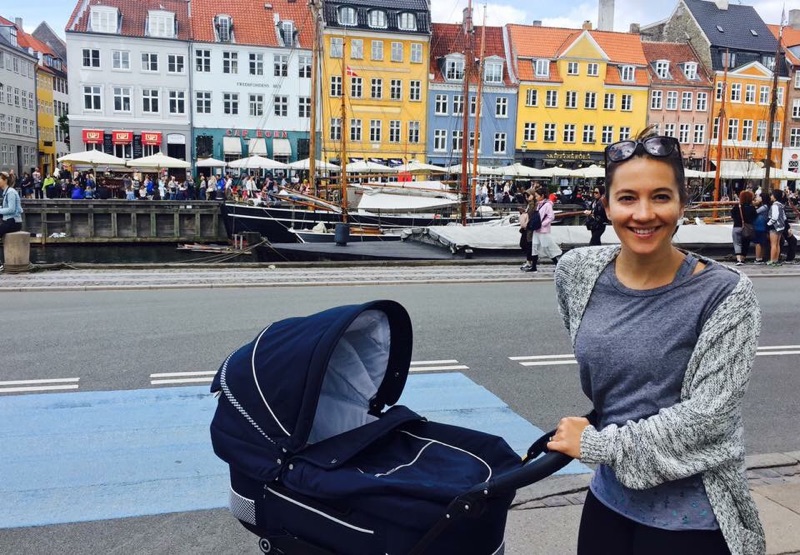
Avoiding the awkward “look away,” I kindly asked the strangers where they bought their Rolls Royce of strollers.

Waddling back to my now husband, I whispered, “Alright, honey.  It’s on.”

Later that year, one sweet stroller and one happy baby later,  we found ourselves back in Scandinavia and basking in the glow and quality of Danish life.  It turns out Denmark is deemed the happiest place on earth-not Disney. I began having conversations with Danish friends, asking a ton of questions and taking note of their anecdotes on family, friends, free-time, food and education. What makes them ranked number one in happiness? What’s the secret?  I was starting to see a pattern.  Authenticity and quality. Kinda like this stroller, I smiled.  


IMG_0899.jpg
Copenhagen, DK 2016


Just northeast of Denmark, sits the country with the world’s best schools-Finland.  Never visiting, but reading the success stories, I was researching for something I could steal.   Yes-Finland is much smaller than the US and has way less poverty, so we are not comparing apples to oranges here. It hasn’t always been sunshine and moonbeams for education in Finland, either.  They revamped their school systems some years back and proved to the rest of the world that less is more-even in education.  So what are they doing differently than us? A. lot.

Here are some pointers I think we should take from the Finns.  
  • No homework.  Home time is for family and extracurricular activities.   
  • They trust their teachers.  The level of autonomy is astounding, and so are the certification requirements.  Teaching is a highly regarded, competitive and well-paid career choice.  
  • No standardized tests -They take one standardized test in their entire elementary and secondary education career.  Teachers create their own assessments to ensure their students are on track.  
  • Focus on the whole child.  Learning supports not only academics, but focuses on art, music, engineering and more.  There is time for play, socialization and developing kids to think for themselves.

So, Finland ranks number one in schools.  Denmark ranks number one in happiness. Norway ranks number one in places to live (and strollers).    

I’m no expert on these countries’ cultures and lifestyles, but one common denominator I see is quality.  Quality, quality, quality. Quality learning experiences.  Quality relationships.  Quality education.  Quality of life.  

So why haven’t we revolutionized things here? And I don't mean "education reform." We have brilliant educators and the tech tools to pull it off.  Are quality learning experiences even the standard anymore?  Or do stakeholders prefer a killer test score to a quick-witted student debate?

We may not have the dream education system now, but we do hold the power in asking:
  1. Are my students asking good questions?  Do my lessons inspire curiosity?
  2. Do my students think for themselves?  Do they respectfully challenge others?
  3. Do my students “hold their own” in a conversation or class discussion?
  4. Do my students produce high quality work?  Do they get to make choices about how they demonstrate their learning?
  5. Do my students enjoy school?  Are they nice to each other?

We know our students. We don't need a standardized test to tell us who knows what.  We informally assess our kids thirty times a day. Trust us. We know our kids. Now can we just get back to QUALITY, please?

Quality learning experiences.  Quality relationships.  Quality education.  Quality strollers.


Tuesday, January 24, 2017

on self-doubt.

Mr. Arable smiled, “Certainly not,” he said, looking down at his daughter with love.  “But this is different.  A little girl is one thing, a little runty pig is another.” I wondered how many child vegetarians are born from E.B. White’s classic. Furthermore, why was a young girl the only person fighting for poor Wilbur?  Wait, was E.B. White a closet vegetarian?


Taking attendance, I picked at the last bite of my grilled ham and cheese.  Lesson ready, questions prepped, chapter books looking crispy.  Interactive anchor chart hot and ready and we were almost ready to plunge into the heart wrenching story of friendship and sacrifice with Fern Arable and her talking animal friends.  


Four minutes in, and before I could even show off my best Wilbur voice, pretty much everything possible went wrong.  Pig and cow noises, two students rolling under the table, one student reading Goosebumps (I was pleased he was reading, but still), one burying her face inside of her shirt, “Wait, what page are we on?” yelped someone from the back. Whispers under breaths.    Blank anchor chart.  Blank notebook pages.  “I’ll wait.” I repeated seventeen times to the sea of non-academic energy.   Am I the substitute?


Nope.  Subs don’t get surprise observations.  “Oh, hey,” I greeted the lady with the laptop.  Turning my back, I scowled at the kid using my overpriced Expo markers to tattoo a green heart on her wrist.  “Stop...now, ” I mouthed before gazing back over my shoulder to flash a smile at my principal.  Can’t wait to debrief on this one, I thought.  Couldn’t my kids at least pull it together for my observation?  It doesn’t matter, I suck.  


The rest of that day went something like this: 1. Skip lunch from stress.  2. Google Starbucks barista insurance benefits.  3. Bouts of self-doubt.  4.  Avoid my principal at dismissal.  5. More self-doubt.  6. Tegan & Sara cd on my commute home. 7.  Drink a glass of Pinot.  8.  Hesitantly prep for tomorrow, knowing I suck.  


Why did I let one bad experience cancel out all of the positive?  Why did I allow my thoughts to spiral into a dark place of “I suck” and “what’s the point?”


Why do we take one episode of disaster and let it redefine who we are?  
Because teachers, by nature are hard on themselves. We are responsible for educating human beings, we allow ourselves no room for error.  


Really, though, you don’t suck.  I don’t suck.  We don’t suck.  Sometimes it just takes a second for the dust to settle and for us to realize that bad days happen.  Take responsibility, identify the triggers for the disaster.  Learn from it, move on.  


Tips for coping with self-doubt when the sh** hits the fan.   
  1. Identify the causes and effects of what happened.  After that terrible, horrible, no good, very bad day, I realized the chaos trigger was my tired seating chart.  A counterproductive seating chart that I should’ve changed weeks ago gave students too much temptation to mess around.  Of course, a combination of factors affected that shi** storm of a lesson, but one quick fix and the next day improved.  Taking responsibility for potential causes makes it much easier to reflect, set a goal and move on.  
  2. Stop worrying about what other people think.  Feedback is important, but get out of your head.  Principals were teachers once, too.  Just because your coach recognizes there are areas for improvement, doesn’t mean that she thinks you’re awful.   
  3. Stop comparing yourself to other teachers. People say you should never judge a marriage or relationship other than your own, because you never know what happens behind closed doors.  I think that’s true for classrooms, too.  Don’t assume that it’s all hunky dory everywhere else.  Just like romantic relationships, everyone struggles sometimes, people just don’t always talk about it.  
  4. Ask yourself-is this a pattern? If yes, set a goal to improve.  If not, forget it and move on.   
  5. Get it out of your system.  Write it, go for a run, talk it out.  Walk it out.  I’ve lost so much sleep over the coulda, woulda, shoulda, taking over my brain.  Release that negative energy someway, somehow.  

Just like with your students, it’s all about improving.  Identify the problem, set a goal, persevere, reflect and move on.  You are a teacher.  A teach-errr.  Ain’t nobody got time for self-doubt.  You are the boss of your classroom...the boss of your craft...the boss of your life.  So, go be a boss and recognize that you got this.  

Tuesday, January 17, 2017

on minimalism.

I’m no minimalist.  Somehow the salt and pepper shakers always shake their way back onto our kitchen countertop despite daily attempts to rid the counters of stuff.  Sippy cups, Dentyne-Ice, black Sharpies, whatever, they always creep their way back out of the drawers I stuff them in.  The heap of tangled I-something chargers are staring at me as I type.  Baby toys on my lap.  We have too much crap.  


Going to the extreme of living in a miniature house and standing on the toilet to use the shower is a bit out of my comfort zone, but the minimalistic approach to making life more meaningful resonates.  Who doesn’t want a more meaningful life? Less stuff equals more happiness, right? Or at least a clearer head.  


I’m a former proponent of the classroom environment checklist.  Data walls, “I can…” statements, Pinteresty anchor charts, peace corners, performance trackers and more.  When I transitioned from leadership back to the classroom, I realized that even in teaching, sometimes less is more.  Posting too much on the wall can overstimulate students and become a time suckage for teachers, especially if just to satisfy a checklist.  Visual clutter can distract from the authentic learning experience.  Posting student work to celebrate accomplishment is meaningful.  Selective anchor charts for student reference makes sense.  But all of the other stuff, c’mon.  Who is all of this hoopla for anyway?  The students?


Beyond classroom walls, there’s the paper pile-up factor.  I used to be a worksheet packet queen. Times have changed, though, and now, a self-proclaimed Google Classroom freak; I’m proud to have gone 95% paperless.  (This excludes my classroom library and novel studies, of course).  I know every school’s tech situation is different and paperless for student work isn’t always possible, but converting bulky teaching binders and filing cabinets to electronic files feels oh so good. And you can access your google drive from anywhere in the world!  


Apart from getting closer to paperless, why not try the 90/90 rule with your teacher materials? Coined by “The Minimalists,” Joshua Fields Milburn and Ryan Nicodemus, the 90/90 minimalism rule basically states that if you look at an item and haven’t used it in the past 90 days, and you don’t plan on using it in the next 90 days, then you should get rid of it. Do you really need three staplers, including the one that jams the moment you slam it to the weathered cork board?


For me, the appeal of a minimalistic approach is the peace of mind it brings.  You know what you have, you know where it is and your focus is decluttered from things to make room for relationships and experiences.  I’m trying the 90/90 rule with my classroom first, then maybe I’ll be ready for the kitchen.  


Teaching requires focus and diligence.  Keeping a clear head on this journey allows us to get the tough job done and deliver our students the stuff that matters.  


And who wants to haul a ramshackle plastic crate on wheels full of teacher stuff to and from work each day?  Purge on, teachers:)

Tuesday, January 10, 2017

on basic needs.

Running on empty this January evening, I recall the fine work of American psychologist, Abraham Maslow.  Back in the 1940’s, he arrived at the theory that we all have basic human needs.  There is a certain hierarchy by which we can function, and we are only able to be fulfilled, one level at a time.  Our behaviors are motivated by the ability to fulfill each level of human need. Maslow never published his hierarchy in the pyramid image, like the one below, but I think it’s most straight-forward in this format.  


Bloodshot eyes and brain racing with the day-ahead duties, I think of my students.  High expectations is one of many common denominators in exceptional teachers, and with these high expectations come the hard reality that sometimes other things in life pull rank over school work.  Physiological needs may not be being met, such as staying up way too late for a child, or not eating breakfast.  At the safety level, having a sick mother at home can be terrifying.  For love and belonging, a student may have had a falling out with her only true friend and is now struggling with pangs of loneliness and rejection, or her parents are going through a divorce.


Whatever it may be-it's not an excuse, but something to think about.  Teaching students that are still persevering through the lower levels of Maslow’s theory makes the job that much harder, and that much more vital at the same time.  


Read more about Maslow’s theory here.


Sleep well teachers…