Tuesday, January 31, 2017

on quality.


Unsure of our destination, we strolled through the cobblestone city streets, lined with thousand year-old churches in the brisk Norwegian autumn air.  As I clenched my now husband’s hand, proud that my swollen ankles were really workin’ my lustrous black boots, I tripped.  

“Whoah, did you see that thing?”

“Yeah, babe, it’s incredible.”
“It’s, just done so well. Simple but with so much character.”
“I know, I haven’t seen anything in real-life, quite so beautiful. You can tell it’s top quality.”
“Should we go ask them where it’s from?”
“Why don’t you do it, babe.  I don’t want the wife to think I’m a creep.”
“Wait, what if they both think I’m a creep?  Pssh.  She just caught me staring at her baby!”

Avoiding the awkward “look away,” I kindly asked the strangers where they bought their Rolls Royce of strollers.

Waddling back to my now husband, I whispered, “Alright, honey.  It’s on.”

Later that year, one sweet stroller and one happy baby later,  we found ourselves back in Scandinavia and basking in the glow and quality of Danish life.  It turns out Denmark is deemed the happiest place on earth-not Disney. I began having conversations with Danish friends, asking a ton of questions and taking note of their anecdotes on family, friends, free-time, food and education. What makes them ranked number one in happiness? What’s the secret?  I was starting to see a pattern.  Authenticity and quality. Kinda like this stroller, I smiled.  
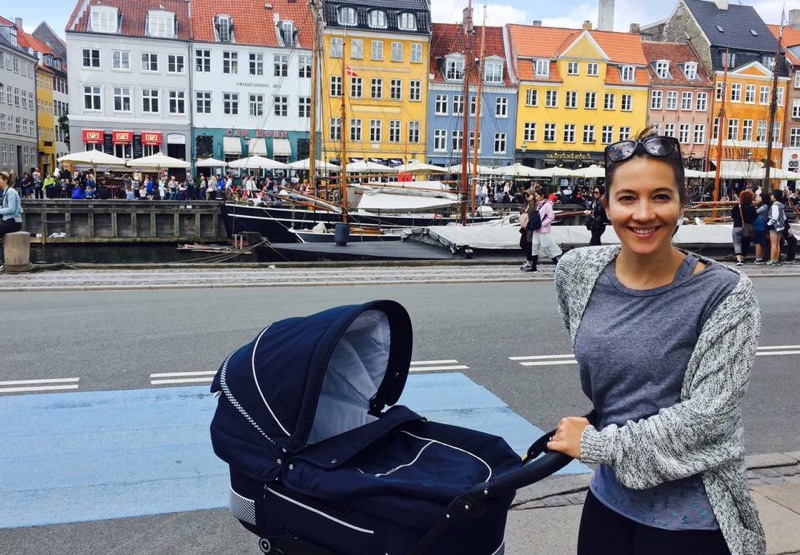

IMG_0899.jpg
Copenhagen, DK 2016


Just northeast of Denmark, sits the country with the world’s best schools-Finland.  Never visiting, but reading the success stories, I was researching for something I could steal.   Yes-Finland is much smaller than the US and has way less poverty, so we are not comparing apples to oranges here. It hasn’t always been sunshine and moonbeams for education in Finland, either.  They revamped their school systems some years back and proved to the rest of the world that less is more-even in education.  So what are they doing differently than us? A. lot.

Here are some pointers I think we should take from the Finns.  
  • No homework.  Home time is for family and extracurricular activities.   
  • They trust their teachers.  The level of autonomy is astounding, and so are the certification requirements.  Teaching is a highly regarded, competitive and well-paid career choice.  
  • No standardized tests -They take one standardized test in their entire elementary and secondary education career.  Teachers create their own assessments to ensure their students are on track.  
  • Focus on the whole child.  Learning supports not only academics, but focuses on art, music, engineering and more.  There is time for play, socialization and developing kids to think for themselves.

So, Finland ranks number one in schools.  Denmark ranks number one in happiness. Norway ranks number one in places to live (and strollers).    

I’m no expert on these countries’ cultures and lifestyles, but one common denominator I see is quality.  Quality, quality, quality. Quality learning experiences.  Quality relationships.  Quality education.  Quality of life.  

So why haven’t we revolutionized things here? And I don't mean "education reform." We have brilliant educators and the tech tools to pull it off.  Are quality learning experiences even the standard anymore?  Or do stakeholders prefer a killer test score to a quick-witted student debate?

We may not have the dream education system now, but we do hold the power in asking:
  1. Are my students asking good questions?  Do my lessons inspire curiosity?
  2. Do my students think for themselves?  Do they respectfully challenge others?
  3. Do my students “hold their own” in a conversation or class discussion?
  4. Do my students produce high quality work?  Do they get to make choices about how they demonstrate their learning?
  5. Do my students enjoy school?  Are they nice to each other?

We know our students. We don't need a standardized test to tell us who knows what.  We informally assess our kids thirty times a day. Trust us. We know our kids. Now can we just get back to QUALITY, please?

Quality learning experiences.  Quality relationships.  Quality education.  Quality strollers.


Tuesday, January 24, 2017

on self-doubt.

Mr. Arable smiled, “Certainly not,” he said, looking down at his daughter with love.  “But this is different.  A little girl is one thing, a little runty pig is another.” I wondered how many child vegetarians are born from E.B. White’s classic. Furthermore, why was a young girl the only person fighting for poor Wilbur?  Wait, was E.B. White a closet vegetarian?


Taking attendance, I picked at the last bite of my grilled ham and cheese.  Lesson ready, questions prepped, chapter books looking crispy.  Interactive anchor chart hot and ready and we were almost ready to plunge into the heart wrenching story of friendship and sacrifice with Fern Arable and her talking animal friends.  


Four minutes in, and before I could even show off my best Wilbur voice, pretty much everything possible went wrong.  Pig and cow noises, two students rolling under the table, one student reading Goosebumps (I was pleased he was reading, but still), one burying her face inside of her shirt, “Wait, what page are we on?” yelped someone from the back. Whispers under breaths.    Blank anchor chart.  Blank notebook pages.  “I’ll wait.” I repeated seventeen times to the sea of non-academic energy.   Am I the substitute?


Nope.  Subs don’t get surprise observations.  “Oh, hey,” I greeted the lady with the laptop.  Turning my back, I scowled at the kid using my overpriced Expo markers to tattoo a green heart on her wrist.  “Stop...now, ” I mouthed before gazing back over my shoulder to flash a smile at my principal.  Can’t wait to debrief on this one, I thought.  Couldn’t my kids at least pull it together for my observation?  It doesn’t matter, I suck.  


The rest of that day went something like this: 1. Skip lunch from stress.  2. Google Starbucks barista insurance benefits.  3. Bouts of self-doubt.  4.  Avoid my principal at dismissal.  5. More self-doubt.  6. Tegan & Sara cd on my commute home. 7.  Drink a glass of Pinot.  8.  Hesitantly prep for tomorrow, knowing I suck.  


Why did I let one bad experience cancel out all of the positive?  Why did I allow my thoughts to spiral into a dark place of “I suck” and “what’s the point?”


Why do we take one episode of disaster and let it redefine who we are?  
Because teachers, by nature are hard on themselves. We are responsible for educating human beings, we allow ourselves no room for error.  


Really, though, you don’t suck.  I don’t suck.  We don’t suck.  Sometimes it just takes a second for the dust to settle and for us to realize that bad days happen.  Take responsibility, identify the triggers for the disaster.  Learn from it, move on.  


Tips for coping with self-doubt when the sh** hits the fan.   
  1. Identify the causes and effects of what happened.  After that terrible, horrible, no good, very bad day, I realized the chaos trigger was my tired seating chart.  A counterproductive seating chart that I should’ve changed weeks ago gave students too much temptation to mess around.  Of course, a combination of factors affected that shi** storm of a lesson, but one quick fix and the next day improved.  Taking responsibility for potential causes makes it much easier to reflect, set a goal and move on.  
  2. Stop worrying about what other people think.  Feedback is important, but get out of your head.  Principals were teachers once, too.  Just because your coach recognizes there are areas for improvement, doesn’t mean that she thinks you’re awful.   
  3. Stop comparing yourself to other teachers. People say you should never judge a marriage or relationship other than your own, because you never know what happens behind closed doors.  I think that’s true for classrooms, too.  Don’t assume that it’s all hunky dory everywhere else.  Just like romantic relationships, everyone struggles sometimes, people just don’t always talk about it.  
  4. Ask yourself-is this a pattern? If yes, set a goal to improve.  If not, forget it and move on.   
  5. Get it out of your system.  Write it, go for a run, talk it out.  Walk it out.  I’ve lost so much sleep over the coulda, woulda, shoulda, taking over my brain.  Release that negative energy someway, somehow.  

Just like with your students, it’s all about improving.  Identify the problem, set a goal, persevere, reflect and move on.  You are a teacher.  A teach-errr.  Ain’t nobody got time for self-doubt.  You are the boss of your classroom...the boss of your craft...the boss of your life.  So, go be a boss and recognize that you got this.  

Tuesday, January 17, 2017

on minimalism.

I’m no minimalist.  Somehow the salt and pepper shakers always shake their way back onto our kitchen countertop despite daily attempts to rid the counters of stuff.  Sippy cups, Dentyne-Ice, black Sharpies, whatever, they always creep their way back out of the drawers I stuff them in.  The heap of tangled I-something chargers are staring at me as I type.  Baby toys on my lap.  We have too much crap.  


Going to the extreme of living in a miniature house and standing on the toilet to use the shower is a bit out of my comfort zone, but the minimalistic approach to making life more meaningful resonates.  Who doesn’t want a more meaningful life? Less stuff equals more happiness, right? Or at least a clearer head.  


I’m a former proponent of the classroom environment checklist.  Data walls, “I can…” statements, Pinteresty anchor charts, peace corners, performance trackers and more.  When I transitioned from leadership back to the classroom, I realized that even in teaching, sometimes less is more.  Posting too much on the wall can overstimulate students and become a time suckage for teachers, especially if just to satisfy a checklist.  Visual clutter can distract from the authentic learning experience.  Posting student work to celebrate accomplishment is meaningful.  Selective anchor charts for student reference makes sense.  But all of the other stuff, c’mon.  Who is all of this hoopla for anyway?  The students?


Beyond classroom walls, there’s the paper pile-up factor.  I used to be a worksheet packet queen. Times have changed, though, and now, a self-proclaimed Google Classroom freak; I’m proud to have gone 95% paperless.  (This excludes my classroom library and novel studies, of course).  I know every school’s tech situation is different and paperless for student work isn’t always possible, but converting bulky teaching binders and filing cabinets to electronic files feels oh so good. And you can access your google drive from anywhere in the world!  


Apart from getting closer to paperless, why not try the 90/90 rule with your teacher materials? Coined by “The Minimalists,” Joshua Fields Milburn and Ryan Nicodemus, the 90/90 minimalism rule basically states that if you look at an item and haven’t used it in the past 90 days, and you don’t plan on using it in the next 90 days, then you should get rid of it. Do you really need three staplers, including the one that jams the moment you slam it to the weathered cork board?


For me, the appeal of a minimalistic approach is the peace of mind it brings.  You know what you have, you know where it is and your focus is decluttered from things to make room for relationships and experiences.  I’m trying the 90/90 rule with my classroom first, then maybe I’ll be ready for the kitchen.  


Teaching requires focus and diligence.  Keeping a clear head on this journey allows us to get the tough job done and deliver our students the stuff that matters.  


And who wants to haul a ramshackle plastic crate on wheels full of teacher stuff to and from work each day?  Purge on, teachers:)

Tuesday, January 10, 2017

on basic needs.

Running on empty this January evening, I recall the fine work of American psychologist, Abraham Maslow.  Back in the 1940’s, he arrived at the theory that we all have basic human needs.  There is a certain hierarchy by which we can function, and we are only able to be fulfilled, one level at a time.  Our behaviors are motivated by the ability to fulfill each level of human need. Maslow never published his hierarchy in the pyramid image, like the one below, but I think it’s most straight-forward in this format.  


Bloodshot eyes and brain racing with the day-ahead duties, I think of my students.  High expectations is one of many common denominators in exceptional teachers, and with these high expectations come the hard reality that sometimes other things in life pull rank over school work.  Physiological needs may not be being met, such as staying up way too late for a child, or not eating breakfast.  At the safety level, having a sick mother at home can be terrifying.  For love and belonging, a student may have had a falling out with her only true friend and is now struggling with pangs of loneliness and rejection, or her parents are going through a divorce.


Whatever it may be-it's not an excuse, but something to think about.  Teaching students that are still persevering through the lower levels of Maslow’s theory makes the job that much harder, and that much more vital at the same time.  


Read more about Maslow’s theory here.


Sleep well teachers…   

Tuesday, January 3, 2017

on work conditions.

Shifting through the makeshift cardboard teacher mailbox cubbies, I spotted a sparkling gold envelope with my name on it.  Jamming my pinky under the flap, I ripped open the envelope to reveal the supersized gold star card cover with my principal’s handwriting inside.  “Thank you for your perseverance this week, it’s much appreciated!”  Normally I would’ve been grateful for the kind words, but today was not the day.  

That September, the heat index steadied strong at ninety degrees for three days straight and my students and I were still without AC. If you dared enter our classroom , the steaming body odor could knock the wind out of you. And the hot and bothered teacher, trying to pretend she wasn’t melting, just might wipe off a sweat saturated desk chair so you may sit in on the math lesson.  

The wall-mounted air conditioning unit died two weeks prior and three roaring fans were expected to keep us cool all day.  Advocating for my students health and my own sanity, the only option was to move to a supply-closet sized alternative classroom until the repair was made.  We spent weeks in a pint-sized space until October arrived and the AC became obsolete.  I wonder if they ever replaced it.  Either way, I wish the greeting card read, “Thank you for your perseverance, the AC unit will be replaced tomorrow.”  

Other less than stellar work conditions, in years past, included one school climate where students sprinted hallways, got in fist fights daily and would bring me sighs of relief if I got through a day with only one f-u to my face.  Then there was the school where my schedule offered absolutely zero teacher break time.  Eat your lunch with kids to supervise, attend support elective teachers during your prep to build relationships.  One year, I went to work with near vomit chunks spewing from my mouth, just to avoid the teacher-shaming of calling in sick.

Thankfully, now, I’m in a positive and supportive work environment. Teaching is hard wherever you go, but is also the most rewarding. It’s almost that time of year where we have conversations about intending to return to our school..or not.  The American proverb sometimes rings true; the grass is always greener on the other side.  

Considering making a change?

  1. Relationships have seasons.  Think of your teaching role as a long-term relationship. My friend, Kelley, once said it best.  Relationships have seasons.  Just because it’s dark and stormy, doesn’t mean you should breakup.  Are you and your beau in rainy weather, or are you just plain living in the Sahara Desert? You’ve invested so much, will starting all over be better?  There may be plenty more fish in the sea, but could you repair your current relationship and come out stronger for it?
  2. Send in a spy.  Do you have a friend that’s recruiting you to join his teaching team?  Sit down for some real talk and compare and contrast your school with his. No one on the inside? This is a bit sneaky, but there’s no better way to gain a pulse of a school than from a surprise visit.  Ask a close friend or significant other to pose as a “prospective parent” for a school tour and have him take notes on the school climate of the new school you’re considering.  
  3. Consider your health. If your work situation is physically making you ill, then finish the year and get out. Keep in mind that school settings vary.  Don't let one school ruin your love of teaching, you will find the right fit eventually.  

Relationships with your students and with your staff, take time to build.  Leaving takes courage, but so does staying.  I hope you find the right path for you in 2017.  

Tuesday, December 27, 2016

on managing space.

My husband and I stream everything and got rid of cable years ago.  Being home for the holidays, the wintry mix of slush and gray mist has encouraged us to snuggle up with family and friends on a fantastic voyage of cable television and coca-cola classics.  I’ll be honest, sunny skies or not, HGTV is addictive.  We’re starting to refer to Chip and Joanna as if we’re old friends and I spent way too much time googling Tarek and Christina’s divorce today.  Hey, it’s vacation, we’re allowed to do nothing.  

The before and after shots are what really pull me into home improvement reality tv.  You get the feeling that the periwinkle blue shutters and subway tiled backsplashes provide these families with a sense of security and serenity they’ve always wanted.   

This got me thinking about maximizing classroom spaces-not just the physical, but also the emotional space.  Next to the new school year, the new calendar year is prime time to refresh your space and reset your students.  Why not take some DIY renovation tips from your friends at HGTV?  


DIY-Renovate your space!

1. Find your design style.
Are you vintage/thrift or contemporary/modern? But seriously, your classroom is your home away from home, so feeling cozy in your space is essential. Find inspiration by pulling images of your dream class space and revisit your pinterest boards.  The biggest enemy of a successful renovation is a wishy-washy designer.  Take stock-what do you love or hate about your classroom now? Hit the thrift shop on your time off and prepare for your 2017 reno!  

2. Lay a solid foundation.
Beyond the ambience, your classroom must have functionality.  Your primary job is to uphold a safe space where students thrive and learn.  In terms of class environments, enforcing and modeling strong values and managing basic systems is our responsibility, but beyond that, it’s on the students. We’ve all had that micro-managing boss that does everything short of manage our wardrobe.  Other than being annoying, that teaches us nothing.  Don’t micro-manage your students and their minute-by-minute actions.  SLANT? SWAG? C’mon, people.  Kids aren’t robots and neither are teachers.  Soon enough, they will be expected to contribute to society and read social cues, self-regulate and think for themselves.  The solid foundation (coupled with lots of love) you provide now can encourage a level of independence that I wish upon all of my students.  As we approach the new year, lay the groundwork and encourage the kids to do the heavy lifting.  


3.  Stick to the plan.
The welcoming of the new year is the perfect time to rehab your management systems. Take this time to lay (or relay) down the laws of the land.  I know, firsthand, that poor student choices can make a teacher lose her freaking mind.  Much of this stress can come from trying to convince students to behave.  Don’t do it. Lecturing students on misbehavior is ineffective and an extreme energy sucker. Just pick a management plan and stick to it. Leaning on “the system” will give you a sense of order in the moments of chaos. Private and restorative conversations can happen after the dust settles.  


4. Call for backup.
Whether it be pride, fear of being questioned, or momentary apathy-sometimes we just don’t ask for help. The classroom setting must be safe and cater to learning.  Be honest about doing your part first, but if someone or something is interfering with class safety and student learning, then leadership has to step in. Remember, there’s a fine line between being a whiner and being a squeaky wheel.  Good leaders will respect you for asking for help and for advocating for your students.  Together, you might find a solution for your 30 x 30 fixer upper and the family inside it.  


Happy New Year!


Tuesday, December 20, 2016

on passion.

The extended caffeine release from day-old black coffee trickled through my bloodstream.  Lauryn Hill’s voice on the speakerbox, dim lights, students trickling in with mostly chill demeanors, pencils sharpened, buses on time. Clicking through my recently refined morning slideshow, proud of my preparedness, click, click, I smiled.  I had a good feeling about today.  


Within fifteen minutes, I was Michael Scott.  Michael Scott running a meeting. My students were now a bunch of Pams, Jims, Angelas, Kevins, Stanleys, Kellys, Merediths and Creeds, slumped in their chairs pretending to care what I said, just because I was the boss.  Thankfully, I had a few Dwights holding on, but not enough to persuade the others to listen.  


So much for my good feeling.  Clearly, the crispy, clean morning routine and class discussion I had planned went out the window.  “Okay, ten minutes of silent reading.”  That bought me some time to regroup and drift off.  Creative writing, that’s it.  Creative writing is the sweet spot that will get them back on track. The great escape- far from test prep and data trackers. Freedom. 


“Okay guys, check out the photograph on the board...”  Daily doses of creative writing would be my new passion project.  My students love creative expression and I love teaching creative writing.  In those Michael Scott moments, I can turn to creative writing to shine light on a defeating situation.  More importantly, I know expressive writing can improve mood, well-being, and reduced stress levels for students.  Later that week, I set aside some time for reflection on this new idea.  After a few reruns of The Office and some chats with friends, I had a plan for creative writing.  


What’s your next passion project?  


  1. Why did you become a teacher? Social justice? To spark curiosity in youth? To teach kids how to use their voices to make change happen? Do you love books and wanted to open the doors to the magical world of reading? Did you have an impressionable teacher and you wanted to pay it forward?  Whatever it was, are you doing it?  Getting in touch with your purpose and mission as an educator may help bring more value to the work you do each day.  You are a teacher for a reason.
  2. If you could impact one element of education right now, what would it be? First, think about your realm of control. The system is the system and though some are broken; focusing on what you can change right now is better energy spent.  Do you want your kids to be more independent thinkers? Do you wish your students had greater access to the arts? What if your class projects directly improved the local community? Identify one element you want to change and set out to change it.  Team up with like-minded educators and unite!
  3. What are your special gifts? Looking beyond your “teacher-self,” what are your strengths? Master chef? Dog lover? Green thumb? Film buff? Bringing your own interests and talents to the classroom engages not only your students, but it will ignite you.  Teaching should be fun!  Projects, research tasks, or informational articles on your passion topic can spice up any set of standards or prescriptive materials.  Lack of autonomy can be stifling, but sharing pieces of you in your work is empowering.  Just be sure to keep it standards-aligned.   Imagine what the students will gain by having an expert (yes-you) on the topic.


So what’s your thing? Take your passion and make it a real live thing. Your thing could become your new passion project for 2017.  Be faithful and loyal and love on that project daily.


You are a teacher for a reason.